Overwicked or Underwicked? How to Tell in Soy Candle Testing
You’ve been there. Staring at your test candle like it personally insulted you. You weighed the soy wax to the gram. Poured at the perfect temp. Followed the wick chart like it was holy scripture. And yet. Here you are, three hours into a burn test, watching your candle completely ignore the laws of physics. Here’s the thing about soy wax: it’s picky. It doesn’t behave like paraffin. It has opinions. And most of the time, when a soy candle is acting up, the wick is the one running the show. Too small, and the flame drowns in its own wax pool. Too big, and you’ve basically lit a campfire in a jar. Neither is good. Both are fixable. But first, you have to know which criminal you’re dealing with.
The Sad, Sputtering Underwicked Candle
An underwicked candle is just depressing to watch. The flame is tiny. Like, insultingly tiny. It sputters and gasps, barely able to melt the wax directly beneath it. After two hours, your melt pool looks like a puddle in a desert. The wax on the sides? Still pristine. Untouched. That’s tunneling, and it’s the classic signature of an underwicked soy candle. You keep waiting. Maybe hour three will be different. Nope. The flame drowns in a pool of its own fuel, and the wick starts to mushroom or curl over from the strain. The scent throw? Forget about it. You might as well be burning unscented wax. Actually, that’s exactly what you’re doing. Hot throw lives or dies by the melt pool reaching the edges. If your wick can’t generate enough heat to push that boundary, your fragrance is trapped in a bunker of solid wax. Boring. Frustrating. And a total waste of good FO.
When Your Candle Turns Into a Tiny Bonfire
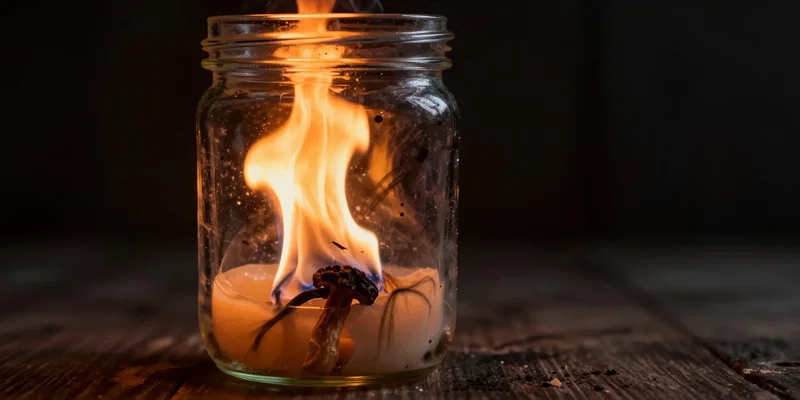
Now flip the script. The flame is huge. Dancing around like it owns the place. You can hear it. That soft, aggressive roar. The jar is getting scary hot to the touch. Black soot is already staining the glass, and you’re only thirty minutes in. Congratulations, you’ve got an overwicked candle. This isn’t just a performance issue. It’s a safety issue. An overwicked candle generates way too much heat. The melt pool is deep and fast, sure, but it’s also out of control. The wick is consuming wax faster than the candle can handle, which leads to that nasty carbon buildup—the mushroom top. That carbon ball drops debris into the melt pool, creates more soot, and throws off the whole burn profile. Your hot throw might smell intense for an hour, but then the candle starts to overheat, the fragrance burns off too quickly, and you’re left with a scorched mess. Oh, and a potential crack in your jar. Not cute.
Why Wick Charts Are Just a Starting Point
Let’s get something straight. Those wick selection charts from manufacturers? They’re educated guesses. That’s it. They don’t know you’re using a 9% fragrance load with a vanilla-heavy oil that’s basically molasses. They don’t know your jar is thicker glass that retains heat differently. Soy candle testing is where the real truth lives. You have to burn. And burn again. Wick up, wick down. Change one variable. One. If you swap the wick and the fragrance and the dye all at once, you’ll never know what fixed the problem. Or caused it. Most wick sizing problems come from assuming the chart is gospel. It’s not. It’s a suggestion from a stranger who has never met your specific wax blend. Treat it that way.
The Burn Test Checklist That Actually Works
Stop guessing. Start logging. Grab a notebook. Or a notes app. I don’t care. Weigh your candle before the first burn. After four hours. After the full cycle. Watch the melt pool at the two-hour mark. Does it reach the edge? It should, or you’re too small. Check the flame height. Should be steady, maybe half an inch to an inch, depending on your diameter. No flickering chaos. Touch the jar. Warm is fine. Hot enough that you can’t hold it? That’s overwicked territory. Look for soot. Sniff the hot throw at hour two and hour four. Does it fade? Does it smell burned? Write it all down. Boring? Maybe. But this is how you solve wick sizing problems without losing your mind. After three or four tests, the pattern screams at you. The right wick size is in there. You just have to burn your way to it.